Elephant Plasterboard
Plasterboard | GIB | Drywall | Gypsum board | Wallboard
So what is Plasterboard?
Plasterboard, also commonly known as GIB, drywall, gypsum board, or wallboard, is one of the most widely used interior lining materials in New Zealand construction. Plasterboard is used for lining internal walls and ceilings in homes, apartments, and commercial buildings, providing a smooth, durable surface ready for painting, wallpapering, or tiling. Its popularity comes from its ease of installation, consistent finish, and performance benefits such as fire resistance, sound control, and improved thermal comfort.
Modern plasterboard systems are designed to suit different building environments and compliance requirements. Standard boards are typically used in dry living areas, while moisture-resistant boards are ideal for bathrooms, laundries, and kitchens. Fire-rated and high-density boards are commonly specified where increased fire protection, impact resistance, or acoustic performance is required. In New Zealand, products such as Elephant Plasterboard are available in a range of options including Standard, AquaSmart, FireSmart, and MultiSmart boards, with multiple sizes, thicknesses, and edge profiles such as tapered edge and square edge to suit different finishing systems and construction needs.
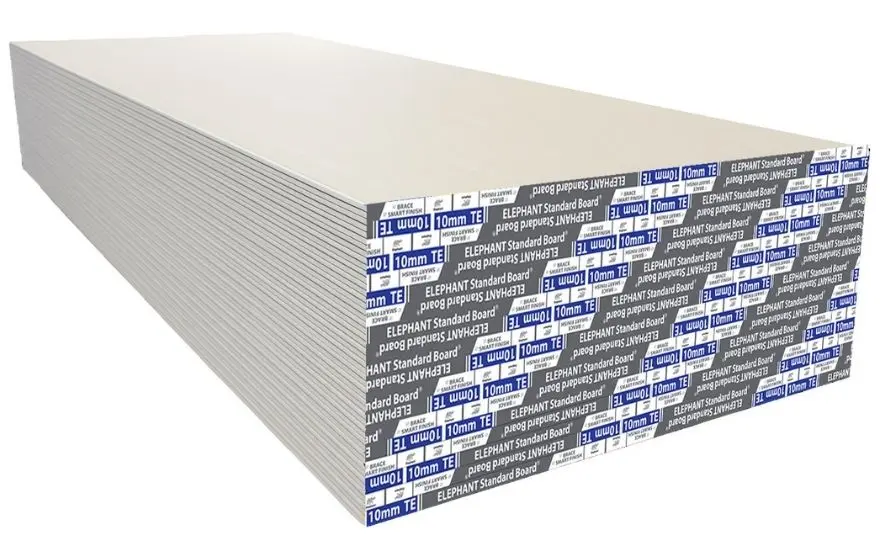
Elephant Standard
Economic general-use internal wall and ceiling lining
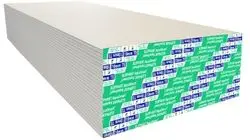
Elephant Aquasmart
High density, moisture resistant as an ideal lining choice for wet areas
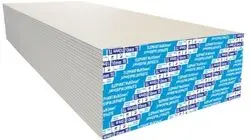
Elephant Multismart
Very high density, interior lining that provides multiple solutions
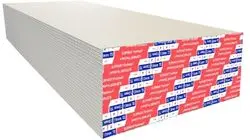
Elephant Firesmart
Extra Fire Resistant core internal wall & ceiling lining
How Is Plasterboard Installed?
In brief;
Installation starts with ensuring the timber or steel framing is straight, level, and ready for lining, with electrical, plumbing, and insulation services completed beforehand. Sheets are measured, cut to size, and fitted around openings, then fixed using plasterboard screws at recommended spacings to prevent movement or sagging. Fixing patterns vary depending on the application, including walls, ceilings, bracing elements, and fire-rated systems. Sheets are installed with staggered joints to improve strength and minimise cracking, and a small gap is typically left at the floor to prevent moisture uptake.
Once fixed, all joints, corners, and fastener heads are taped and stopped with jointing compound, built up in layers to create a flush surface. After drying, the area is sanded smooth to achieve a consistent finish ready for decorating. The lined surface can then be sealed and painted, wallpapered, or tiled, with additional waterproofing required in wet areas. Proper installation is key to achieving a durable, crack-resistant finish and ensuring performance across acoustic, fire-rated, and moisture-resistant applications.
🟩 EPB Standard
General internal walls & ceilings
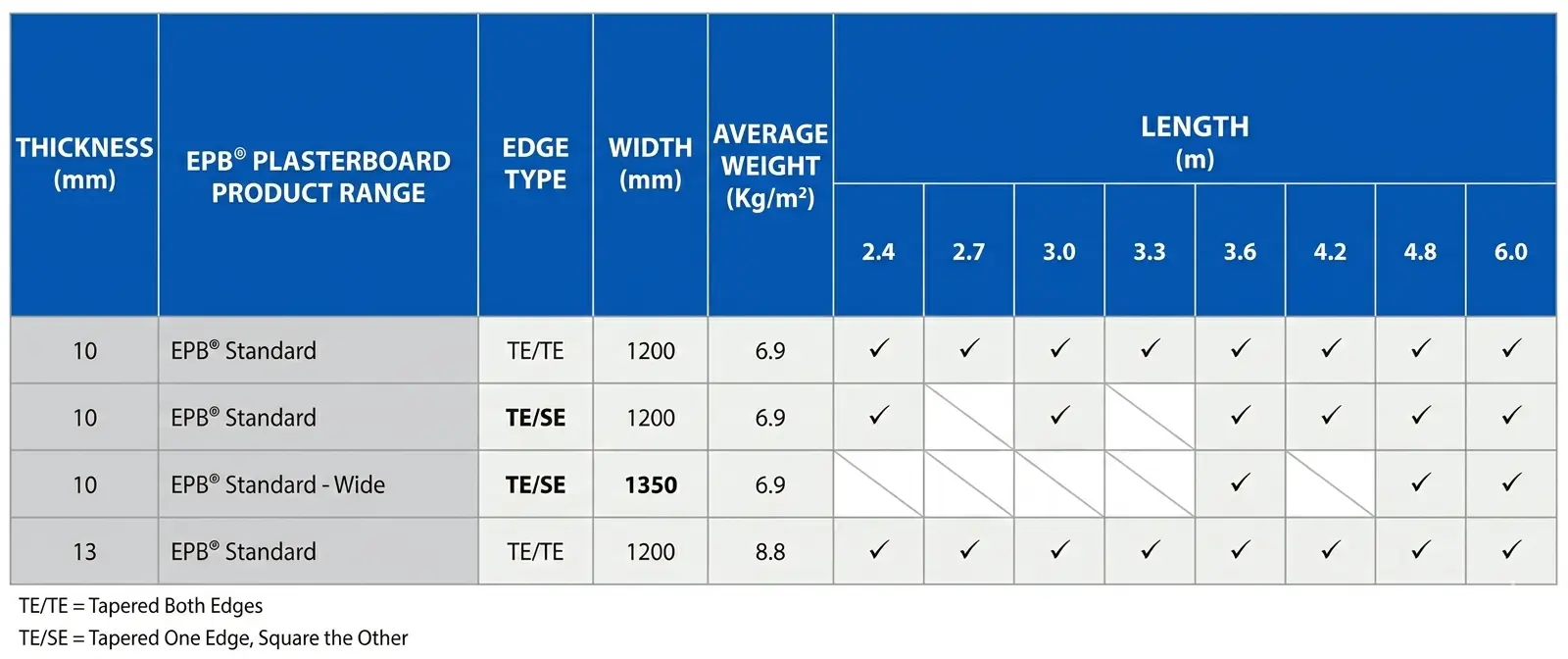
EPB Standard is the most widely used plasterboard for everyday wall and ceiling linings. It’s a cost-effective, medium-density board suitable for normal internal conditions. Suitable for residential and commercial builds and compatible with bracing, fire-rated, and noise control systems, it is the base plasterboard for most interior linings.
We stock the most popular 2400 x 1200 x 10mm TE/TE Elephant Standard plasterboard ex yard. Other sizes and thicknesses (e.g., 13mm) are available via special order.
Standard Plasterboard details
💦 EPB AquaSmart
Moisture-resistant wet area board
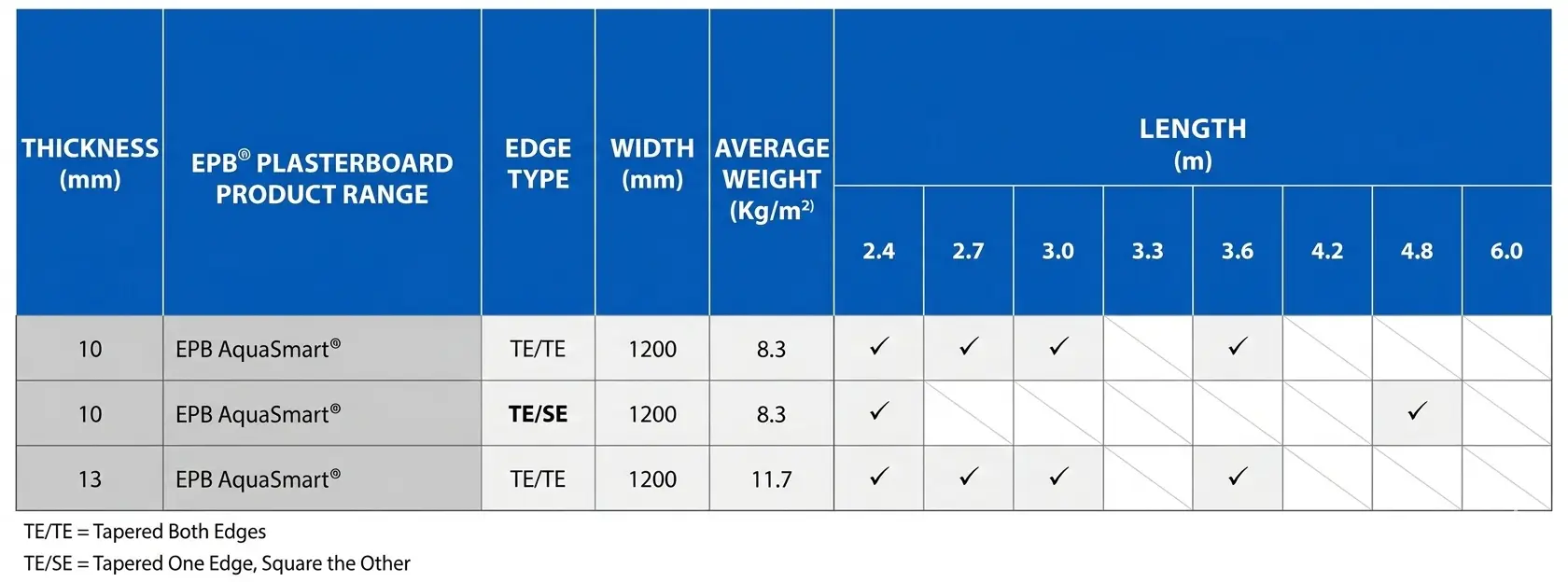
Designed for wet, high-humidity spaces like bathrooms, laundries, and kitchens, AquaSmart has an enhanced moisture-resistant core that performs better in damp conditions than standard boards. It offers an excellent substrate for waterproof membranes, shower linings, and tiles when combined with appropriate waterproofing.
We stock the most popular 2400 x 1200 x 10mm TE/TE Elephant AquaSmart plasterboard ex yard. Other sizes and thicknesses (e.g., 13mm) are available via special order.
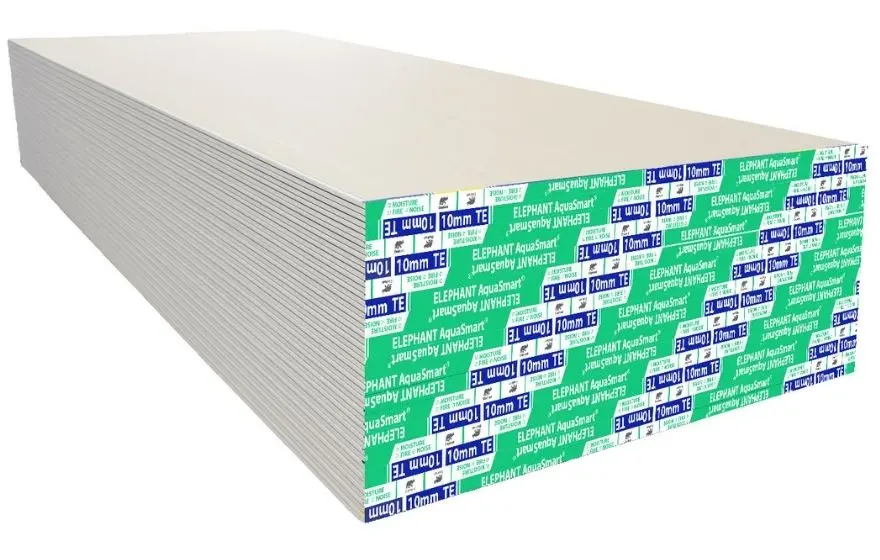
AquaSmart Plasterboard details
🔥 EPB FireSmart
Moisture-resistant wet area board
FireSmart boards feature a higher-density core that gives improved fire resistance for internal wall and ceiling systems where enhanced fire performance is required. They are typically specified in assemblies needing tested fire ratings. Available in different thicknesses to meet performance needs.
We have the availability of the 10mm and 13mm thick Elephant FireSmart plasterboard in varying sizes across TE/TE and TE/SE edging.
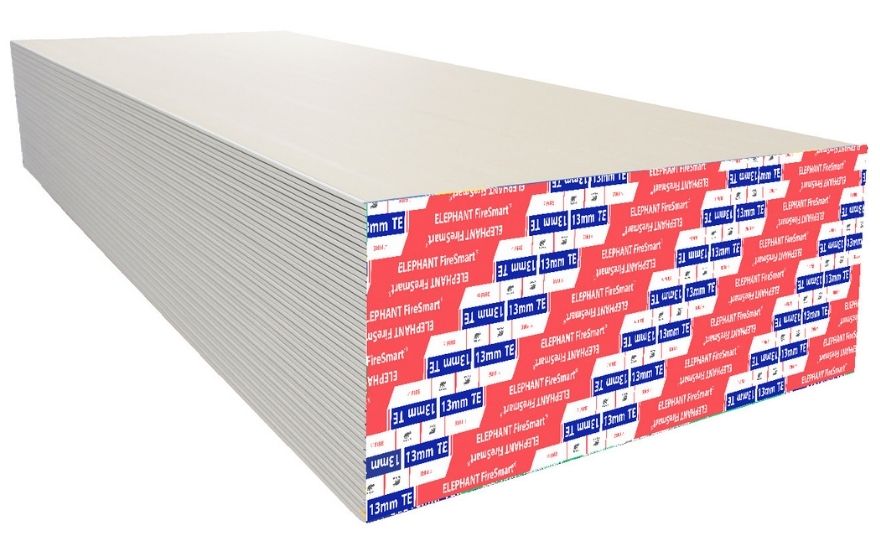
FireSmart Plasterboard details
🧠 EPB MultiSmart
Multi-functional high-density board
MultiSmart combines several enhanced properties - higher fire resistance, better noise control, bracing performance, and impact resistance - in one plasterboard. It’s ideal where walls need to satisfy multiple performance criteria without using separate specialist products.
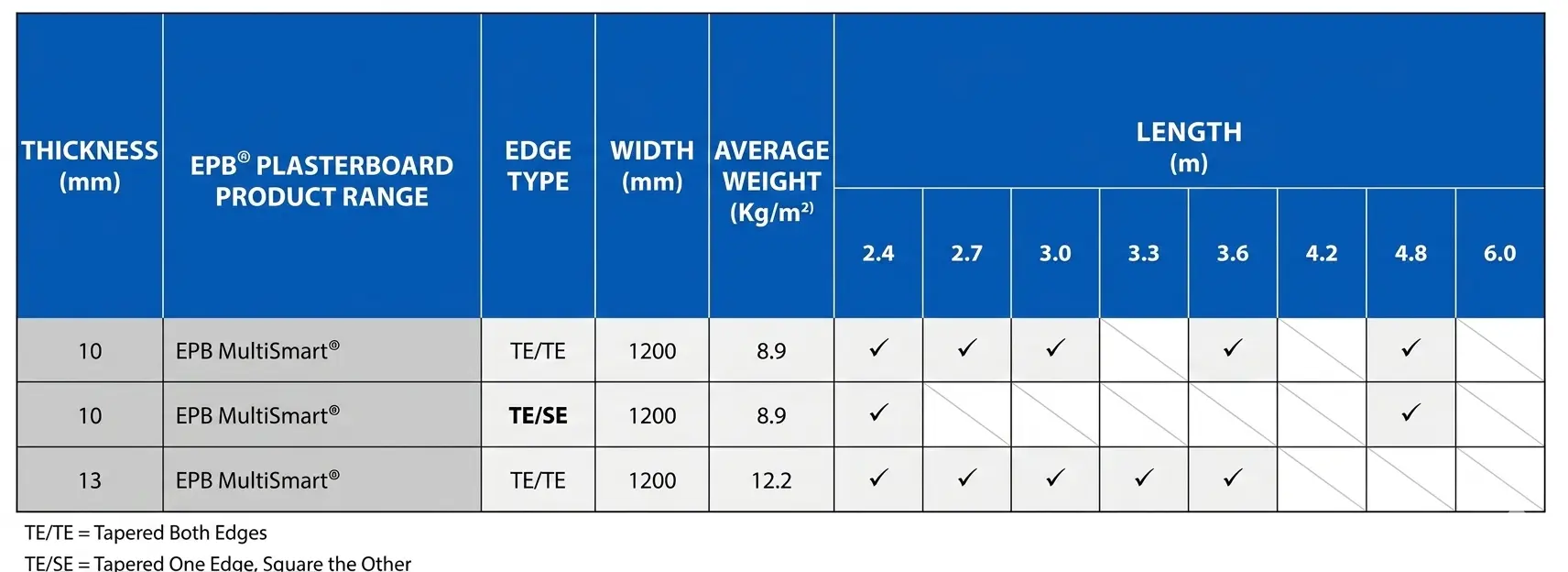
We have the availability of the 10mm and 13mm thick Elephant MultiSmart Plasterboard in varying sizes across TE/TE and TE/SE edging.
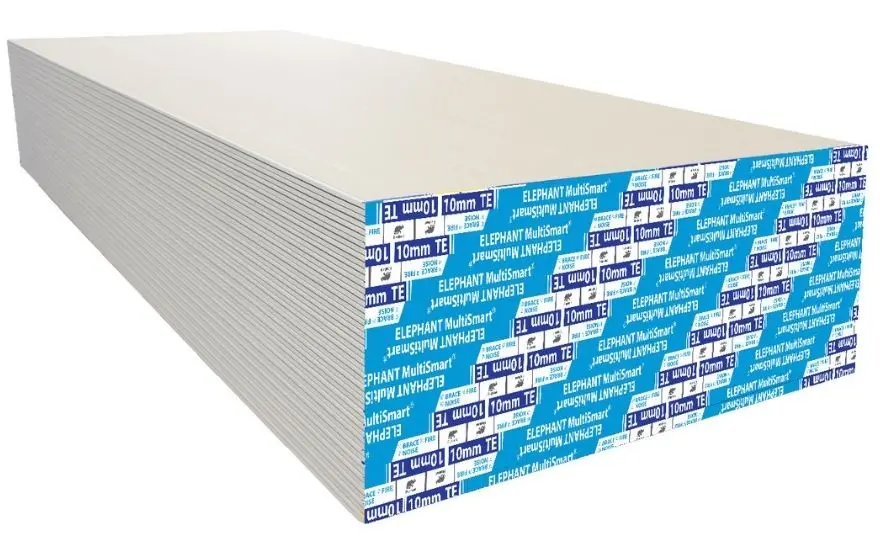
MultiSmart Plasterboard details
What Do You Use Plasterboard For?
Plasterboard is used to line and finish internal walls and ceilings in residential and commercial buildings, providing a smooth, flat surface ready for painting, wallpapering, or tiling. It conceals timber or steel framing, services, and insulation while creating a clean, consistent finish throughout a space. Plasterboard is a core part of modern construction due to its ease of installation, cost-effectiveness, and ability to suit a wide range of interior applications.
Depending on the project requirements, different types of plasterboard are selected to meet specific performance standards and building code requirements:
- Standard interiors – General wall and ceiling linings for living areas, bedrooms, and offices where no special performance is required
- Moisture-prone areas – Moisture-resistant boards for bathrooms, kitchens, and laundries to help prevent swelling, mould, and water damage
- Fire resistance – Fire-rated plasterboard used in tested systems to slow the spread of fire and meet compliance requirements
- Bracing, acoustic control, and impact resistance – High-density or specialised boards designed to improve structural bracing, reduce sound transfer between rooms, and withstand higher levels of wear and impact
Choosing the right plasterboard ensures the finished space not only looks good but also performs as required for durability, safety, and long-term reliability.

📏 Plasterboard Thicknesses, Edging & Sizing
Plasterboard sheets are available in a range of thicknesses, edge profiles, and sheet sizes to suit different wall and ceiling applications. The most common thicknesses are 10mm and 13mm, with 10mm typically used for standard wall linings and 13mm preferred for ceilings, higher durability areas, and where improved rigidity or performance is required. Thicker boards are also used in fire-rated systems, acoustic walls, and bracing applications, where additional strength and compliance with building requirements are needed.
Edge profiles play a key role in how plasterboard is finished. The most common are TE/TE (tapered edge both sides) and TE/SE (tapered edge and square edge). Tapered edges allow for recessed jointing, where tape and compound can be applied and feathered out to create a smooth, flush finish ready for painting. Square edges are typically used where sheets meet at internal corners or specific junctions. Choosing the correct edge profile helps achieve a cleaner finish and reduces the visibility of joints.
Plasterboard sheets are manufactured in standard widths, typically 1200mm, with a range of lengths to suit common stud and ceiling spacings. Standard lengths are suitable for most builds, but longer sheets can be specified to reduce the number of joints, improve installation efficiency, and deliver a higher-quality finish with fewer stopping lines. Selecting the right combination of thickness, edge type, and sheet size helps streamline installation while improving overall strength, appearance, and performance.
Frequently asked questions
Here are some commonly asked questions on Plasterboard.
Yes. Moisture-resistant plasterboard like EPB AquaSmart is designed for high-humidity wet areas such as bathrooms and laundries when combined with appropriate waterproofing.
10mm is common for walls and ceilings in normal conditions. 13mm offers increased strength, especially for ceilings and bracing. Project requirements and local codes determine the best choice.
Yes. After installation, joints and fasteners must be taped and finished with joint compound or plaster before painting or decorating.
Plasterboard is usually screwed to timber or steel framing. Fixing patterns and framing centres influence board performance and should follow manufacturer guidelines.
When installed correctly and kept dry, plasterboard can last for decades. Regular maintenance and protection from moisture or impact damage will extend its lifespan.
Yes. Fire-rated plasterboard is specifically designed with enhanced cores to slow the spread of fire when used in tested wall and ceiling systems.
Screws are generally spaced around 200–300mm apart, depending on the application. Correct spacing is critical to prevent movement, sagging, or cracking over time.
Yes. Standard plasterboard should not be used in wet or high-moisture areas. Moisture-resistant boards are required to prevent swelling, mould, and long-term damage.
Yes, plasterboard is commonly used for ceilings, but you need the right type. Ceiling boards are designed to prevent sagging and are typically installed on framing centres up to 600mm with correct fixing spacing.
Cracking usually comes from poor jointing, movement in the framing, or incorrect installation. Proper taping, stopping, and fixing are essential to avoid visible cracks after painting.